A Guide to Sunrise Photography
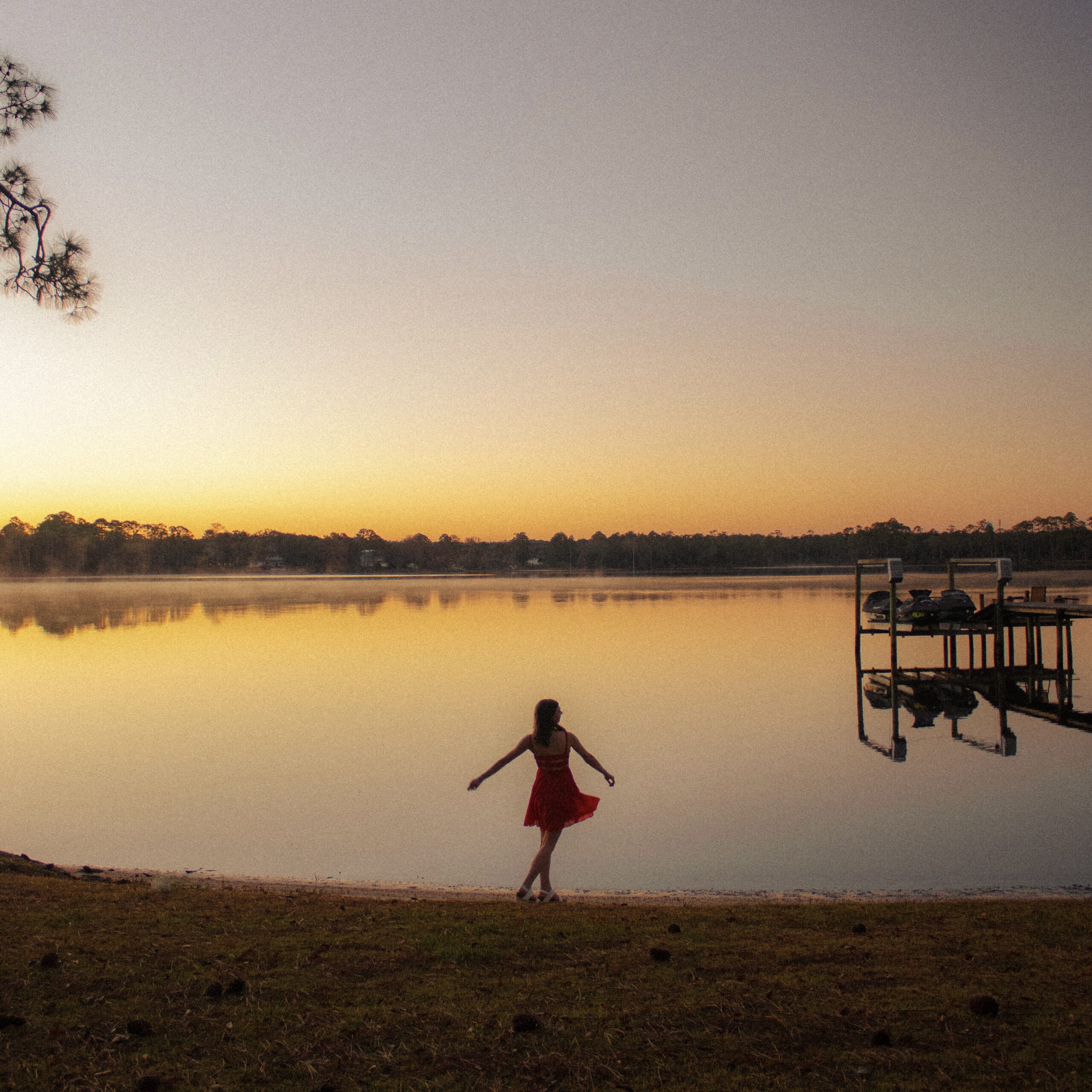
There’s a stillness in the early morning that feels sacred. When the world hasn’t yet stirred and the light begins to softly pour over the horizon, magic happens—and the camera becomes a witness to it all.This image, taken just as the first golden rays kissed the earth, reflects the serenity and wonder of sunrise photography. The subject, dressed in red, twirls gently at the edge of the water, becoming a part of the scene rather than dominating it. The dock, still reflections, and wide open sky all add to a narrative that speaks of peace, anticipation, and quiet joy.
If you’re looking to capture this kind of moment, here are some essential tips:
1. Arrive Early — Earlier Than You Think
The best light often occurs before the sun peeks over the horizon. This pre-dawn glow, also known as the “blue hour,” casts a cool, diffused light that adds softness and mood. Plan to be in position at least 30 minutes before the official sunrise time.
2. Scout Your Location Ahead of Time
This image was taken near a calm lake with an unobstructed view to the east. Look for spots where you can frame the sunrise with foreground elements—trees, docks, water, or people—for added depth. A peaceful shoreline or open field can be the perfect canvas for sunrise colors.
3. Use a Wide Aperture & Steady Hands (or a Tripod)
In low light, you’ll need to adjust your settings: Aperture: f/2.8 to f/4 for soft background blur and better light intake. Shutter speed: Be cautious of motion blur if hand-holding; keep it above 1/125 sec or use a tripod for slower shutter speeds. ISO: Begin with ISO 400–800 and adjust based on light and desired grain. This particular shot has a soft, grainy texture that adds to the nostalgic tone—intentional or not, it complements the tranquil mood.
4. Think About Movement
The dancer in the photo isn’t just standing—she’s moving. Her twirl adds life and storytelling, anchoring the viewer’s eye. If you’re photographing a person, encourage natural gestures. Stillness is beautiful, but movement breathes soul into your frame.
5. Edit to Preserve the Mood
Post-processing is your friend. Emphasize the gradient from deep blue to golden yellow in the sky. Warm up the shadows if needed, and keep the saturation subtle—sunrise speaks softly; it doesn’t need to shout.
Final Thoughts
Sunrise photography isn’t just about light—it’s about atmosphere. It’s about waking early when no one else does, breathing in the chilled air, and capturing a fleeting miracle. Whether it’s a quiet lake, a mountain ridge, or your own backyard, morning light always offers something sacred. Take your time. Let the day begin with beauty—and let your lens do the witnessing.